top of page


Ongoing Studies
You are welcome to join our studies!
.jpg)
.jpg)
Unraveling the Impact of Sleep Problems on Executive Functioning and Frontoparietal Activity in Teens: A Pilot Study
.jpeg)
Examining the independence between cognitive stability and flexibility at the item level: A frontoparietal fNIRS study
.jpg)
.jpg)

fNIRS
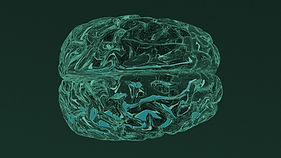
Functional near-infrared spectroscopy (fNIRS) is an optical brain monitoring technique which uses near-infrared spectroscopy for the purpose of functional neuroimaging. Using fNIRS, brain activity is measured by using near-infrared light to estimate cortical hemodynamic activity which occur in response to neural activity. Alongside EEG, fNIRS is one of the most common non-invasive neuroimaging techniques which can be used in portable contexts. The signal is often compared with the BOLD signal measured by fMRI and is capable of measuring changes both in oxy- and deoxyhemoglobin concentration, but can only measure from regions near the cortical surface. fNIRS may also be referred to as Optical Topography (OT) and is sometimes referred to simply as NIRS.
bottom of page